Why Butt Weld Pipe Fittings Are Essential for Industrial Piping Systems
Pipe fittings form the backbone of any fluid or gas handling system, and the choice of joining method directly affects reliability, safety, and maintenance costs. Among the various techniques available, butt welding stands out for its ability to create strong, leak-proof connections without the added weight or complexity of threaded or flanged joints. This article explores the role of butt weld pipe fittings in demanding industrial environments, covering their advantages, material options, and key selection criteria.
What Are Butt Weld Pipe Fittings?
Butt weld pipe fittings are components designed to be joined to pipes through a full-penetration weld at the abutting ends. Unlike socket weld or threaded fittings, which rely on overlapping surfaces, butt welding brings two pieces together end-to-end and fuses them into a single continuous metal section. This method produces a smooth internal bore with no crevices or protrusions, making it ideal for high-pressure pipelines, sanitary systems, and processes where cleanliness and flow efficiency matter.
The weld itself is typically performed using TIG welding or orbital welding for precision and consistency. These processes allow the welder to control heat input and penetration, resulting in joints that meet strict industry standards. Because the weld zone is as strong as the parent material, properly executed butt weld fittings can handle severe thermal cycling, vibration, and corrosion without failing.
Material Choices for Butt Weld Fittings
The performance of butt weld pipe fittings depends heavily on the material selected. Common choices include stainless steel, carbon steel, and copper nickel alloys, each offering distinct benefits.
Stainless Steel
Stainless steel is widely used in food processing, pharmaceutical, and chemical plants due to its corrosion resistance and ease of cleaning. Butt weld fittings made from 304 or 316L stainless steel are standard in sanitary fittings applications, where smooth surfaces and minimal dead space are critical. The material also holds up well in high-pressure pipelines that transport aggressive fluids or operate at elevated temperatures.
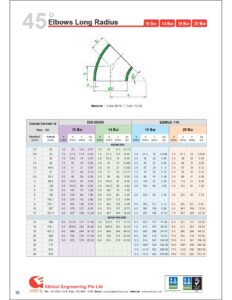
Carbon Steel
For general industrial use, carbon steel provides strength and affordability. Butt weld fittings in carbon steel are common in oil and gas industry installations, pneumatic systems, and hydraulic systems where weight and cost are primary concerns. They require proper surface protection against rust, often through galvanising or painting, but they deliver reliable service in controlled environments.
Copper Nickel
Copper nickel fittings are valued in marine and offshore applications because of their excellent resistance to seawater corrosion and biofouling. Alloys such as 90/10 copper nickel are frequently specified for piping systems on ships, desalination plants, and coastal industrial facilities. The material also maintains good weldability, allowing butt weld connections that match the base metal's durability. For operations near saltwater or in humid tropical climates, copper nickel fittings offer a longer service life than many alternative materials.
Key Advantages of Butt Welded Joints
Choosing butt weld pipe fittings brings several practical benefits over other joining methods:
- Leak integrity: A full-penetration weld creates a monolithic joint with no gaskets or threads that can loosen over time. This is essential for high-pressure pipelines and systems handling hazardous fluids.
- Smooth internal surface: Because there is no internal lip or recess, the bore remains unobstructed, reducing pressure drop and preventing debris accumulation. This feature is particularly important in sanitary and food-grade lines.
- Weight reduction: Butt weld fittings eliminate the extra mass of flanges or coupling nuts, making them suitable for weight-sensitive installations such as offshore platforms or mobile equipment.
- Compact layout: The fittings take up less space than flanged assemblies, allowing tighter pipe routing in congested machinery rooms or skid-mounted packages.
- High temperature tolerance: Welded joints can withstand temperatures that would cause gasket failure or thread creep in other connection types, extending the operating range of the system.
These advantages make butt weld pipe fittings a preferred choice for engineers designing long-lasting, low-maintenance piping networks.
Applications Across Industrial Sectors
Because of their reliability, butt weld fittings appear in a wide range of settings. In the oil and gas industry, they are used for gathering lines, process piping, and injection systems where leaks are unacceptable. Pneumatic systems and hydraulic systems also rely on welded joints to maintain pressure integrity under cyclic loads.
In the marine sector, copper nickel fittings are often joined by butt welding to create seawater cooling lines, fire mains, and ballast systems that resist corrosion for decades. Similarly, chemical processing plants use stainless steel butt weld fittings in reactors, heat exchangers, and transfer lines to avoid contamination and withstand aggressive media.
Sanitary fittings in breweries, dairies, and pharmaceutical facilities follow the same principle: butt welding provides a crevice-free path that meets hygiene standards. The same technique applies to high-purity water systems in electronics manufacturing, where even microscopic roughness can trap bacteria or particles.

Standards and Quality Assurance
Fabricating butt weld pipe fittings to a consistent quality requires adherence to recognised codes. ASME, ANSI, and ASTM standards define dimensions, wall thicknesses, and testing procedures for welded fittings. For example, ASME B16.5 covers dimensions for flanges, while ASTM A312 specifies seamless stainless steel pipe. When ordering fittings for critical service, specifying the applicable standard ensures that the parts will fit and perform as expected.
Weld quality itself is governed by procedures such as ASME Section IX or AWS D1.1, which outline acceptable weld profiles, penetration, and nondestructive examination methods. Radiography or ultrasonic testing is often required for high-pressure pipelines to confirm that the weld is free of cracks or incomplete fusion.
Installation Considerations
Proper installation of butt weld fittings demands careful preparation. Pipe ends must be cut square and cleaned of mill scale, oil, and moisture. Beveling the edges helps achieve full penetration without excessive heat input. For orbital welding, the fitting is held in a collet that rotates the torch around the joint, producing a uniform bead. TIG welding gives the welder more control over heat input, which is useful for thin-walled tubing or alloys like copper nickel that require precise amperage settings.
After welding, the joint should be inspected visually and, where necessary, pressure-tested. In corrosive environments, post-weld heat treatment or passivation may be needed to restore the material's corrosion resistance. Following the manufacturer's recommendations for filler metal and shielding gas also reduces the risk of porosity or contamination.
Comparing Butt Weld to Other Joining Methods
Threaded fittings are simpler to install but introduce stress concentrations at the threads and potential leak paths. Flanged connections allow easy disassembly but add weight and require gasket maintenance. Butt weld pipe fittings offer a permanent, high-integrity joint that is often the best choice when the system will remain in service for many years without planned disassembly. The trade-off is that welding requires skilled labour and proper equipment, which may increase initial installation time. However, the reduction in future maintenance and leak risk frequently offsets that upfront cost.
For systems that must operate at elevated pressures or temperatures, or where space is limited, the advantages of butt welding become even more pronounced. The same holds true for applications where fugitive emissions are regulated, because a welded joint has no potential leak path through threads or gaskets.
Selecting the Right Fitting for the Job
When specifying butt weld fittings, consider the following:

- Material compatibility: Ensure the fitting alloy matches the pipe material to avoid galvanic corrosion. For example, never connect copper nickel directly to carbon steel without an insulating transition.
- Pressure and temperature rating: Confirm that the fitting's design meets or exceeds the system's maximum operating conditions. Standards tables provide pressure ratings for various sizes and schedules.
- End preparation: Plain-end fittings are typical for butt welding, but some manufacturers offer beveled ends to simplify alignment. Verify that the fitting's inside diameter matches the pipe's outside diameter for full contact.
- Traceability: For critical service, choose fittings that are stamped or marked with the material grade and heat number, enabling full traceability back to the mill.
Working with a knowledgeable supplier, such as a Singapore-based specialist that stocks both copper nickel fittings and standard steel options, can streamline the sourcing process. A supplier that understands local conditions and international standards can help avoid mismatches that lead to field rework.
Future Trends in Butt Weld Technology
Advancements in orbital welding and automated TIG systems are making butt weld joints more repeatable and less dependent on individual welder skill. Real-time monitoring of weld parameters can flag deviations before they become defects. Meanwhile, new filler metals and flux formulations are improving the weldability of high-alloy materials like duplex stainless steel and copper nickel. As industries push for higher pressures and lower emissions, the demand for reliable butt weld pipe fittings will continue to grow.
In summary, butt weld pipe fittings provide a robust, long-lasting connection method suited to the most demanding industrial applications. Whether the material is stainless steel, carbon steel, or copper nickel, the key to success lies in proper design, adherence to standards, and careful installation. Engineers and procurement professionals who understand these factors can specify fittings that deliver safe, efficient service for decades.